Branding
Mar '26
Smart ways to use AI to help with branding your business

Tom Bradley in Branding

Related services
We’ve noticed a growing trend lately: more businesses are turning to AI tools to help create brand visuals - even logos - but what is AI actually good for when it comes to developing out your brand?
Some are experimenting with AI out of curiosity, while others see it as a way to speed up the process or cut costs - ‘why should I pay someone thousands to design me a logo when AI can do it in seconds?’.
The answer to this question is that the results of using AI to design a brand (visually), fall far short of what could be achieved the ‘conventional’ human way.
This is due to a few things - firstly the aesthetics (every example we’ve seen feels bland and generic), secondly the practicalities (AI isn’t currently able to offer you the brand assets in the formats you’ll need) and lastly (arguably most importantly), there’s a lot missing beneath the surface too.
But you’ve heard all this before I’m sure, from countless other creatives defending their professions and their livelihoods. The difference here is that I’m not just going to tell you that you shouldn’t use AI for your brand - I’m going to tell you how you can use it to drive your brand forward.
The limitations of using AI for branding
One of the biggest limitations with AI-generated branding is that it doesn’t offer original thinking. These tools are trained on vast datasets of existing content - as such, they don’t come up with new, fresh or innovative ideas; they just remix what’s already out there.
So if you ask an AI to create a logo for a café or a skincare brand, it will scan what’s typical in those sectors and churn out something similar.
That might sound fine in theory, but branding isn’t about fitting in is it? It’s about standing out. If your identity ends up looking like a dozen others, you lose the ability to tell your own story or make a memorable impression.
There are also some important legal considerations here. AI image generators can unintentionally pull from copyrighted material and there’s still a lot of grey area around who owns AI-generated work.
Where AI can be genuinely helpful with branding
Despite the limitations with design, there are areas where AI can bring real value to the branding process. For example, it can be a powerful tool in the earlier strategic stages - helping you to research your market, organise ideas, spot patterns and opportunities and generally give shape to the direction you want to go in.
Some practical and sensible ways to use AI include:
Mapping out customer needs and motivations
Creating initial personas to understand different audience types
Analysing competitors and identifying any gaps in the market
Exploring your brand values
Structuring a basic brand strategy
Used in this way, AI can help you articulate what you want your brand to be and is a great way to get your thinking clear before moving into the visual and creative stages.
You can think of a brand a bit like a Rubik’s Cube - when one piece is out of place, the whole thing is unresolved. So it's vital that you have a solid understanding the who, what, where and why before you dive into the visual aspects of your brand.
Questions to ask AI when building your brand
We've outlined where AI might be able to help with your business - now it's time to think about how. A great starting point is to have an in-depth conversation with AI about the fundamentals of your business. First though, you need to give it enough real context to work with and the quality of its answers and insights really depends on the quality of the brief you give it (just like when working with your designer!).
That means sharing clear information about your business - what it offers, who it serves, what makes it different, who your competitors are etc. It also helps to include any existing ideas you have about your brand values, tone of voice, positioning, goals and ambitions as well.
Armed with your backstory - it can then start the brand interrogation!
Ask your AI:
Act like a critical brand strategist and offer insight and guidance
What questions have I not answered yet about my brand?
What underlying problem does my business really solve?
What makes my offer different from competitors?
Who is most likely to buy from me and why?
What does my audience care about most?
What are the likely frustrations, concerns or barriers for my customers?
What common patterns or clichés appear in my market and how can I avoid them?
In what areas are competitors all starting to look or sound the same?
What positioning opportunities might exist for a business like mine?
What feels generic or unclear in my current brand description?
Remember: when you receive the feedback, don't just take AI's word for it - challenge it - this is a conversation. It's your brand - you can listen to the advice or you can steer it in a new direction.
Once you're in a happy place, you can start to ask things like:
What parts of this strategy feel strongest / weakest / contradictory or inconsistent?
What is the clearest way to describe how this brand is different?
Can you help me write a simple positioning statement?
What could be the most compelling brand message for this audience?
What are the core values behind this business?
Support your branding designer with AI
The best way to bring AI into your branding work is to treat it as a tool for building clarity around your brand and its positioning in the marketplace. You can then share this with your designer or creative team.
Use it to gather insights, explore possibilities and form a more detailed and thoughtful brief to kick off the process. That brief can then be handed to a creative professional who will translate it into something distinct and meaningful - not the generic eye candy you would have received from an AI generated logo.
This kind of approach respects the role of creativity in branding. It allows room for interpretation, concept development and the small decisions that make something feel right for your business. Those aren’t things that can be automated.
Why it’s worth taking your time
We often remind clients that branding isn’t something you need to tick off a list to get started, Brand is where everything starts, it needs time and devotion. It’s not just about having a logo or a colour scheme - it’s about expressing who you are and why you’re different in a way that connects with people.
That kind of work can’t be rushed (and that’s not a bad thing). It gives you space to get it right - to explore what you want to stand for, how you want to sound and how your customers should feel when they interact with you.
Brands that last are built with patience, strategy and intention.
Wrapping up...
AI tools are getting better and we can definitely take advantage of this to support parts of the branding process. They’re not however, a replacement for strategic thinking or creative expertise and shouldn’t be used to skip important steps in the process with your creative partner.
Whether you’re building a brand from scratch or refreshing what you already have - the most useful thing AI can offer is structure and direction. Once that foundation is in place, the real creative work can begin.
If you’ve been experimenting with AI in your brand or marketing work and want to talk through how to use it more effectively, we’re always happy to have a conversation.
Thanks for reading
For more news follow us @rootstudiouk
Similar posts
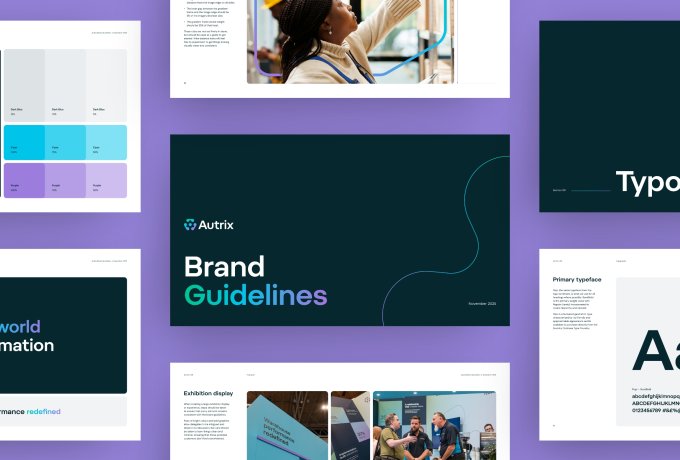
Can brand guidelines become too strict? This article looks at when rules help, when they hold a brand back and how to create space for better design decisions.
How membership organisations can make the value of membership easier to see, understand and use throughout the member journey.