Branding
Aug '26
When do brand guidelines become too strict?

Tom Bradley in Branding
Related services
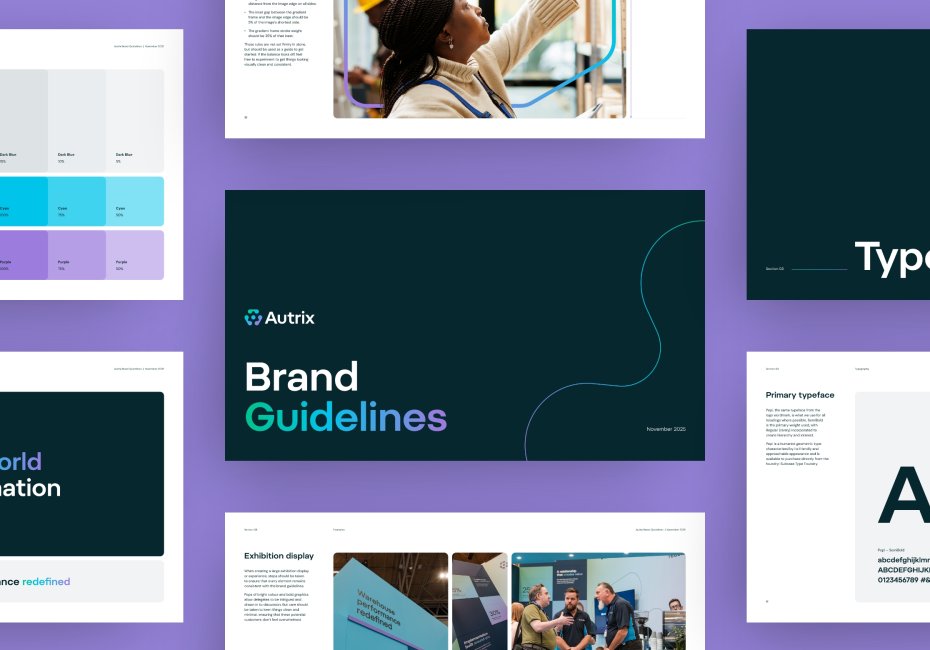
Brand guidelines are usually created for a good reason. As a business grows and more people start creating things on its behalf, it becomes easier for the brand to lose its consistency.
Marketing teams, designers, developers, printers and outside agencies may all be making choices about how the brand should look, sound and feel. Without clear guidance, differences (large or small) can start to creep in over time.
That is why brand guidelines matter - keeping everything on track with a nice set of clear brand rules. Another problem comes though when those rules become too strict...
If every layout is fixed and every piece of communication follows the same small set of templates, the brand may stay consistent but it also starts to feel a bit too predictable and stale.
At that point, the rules that were meant to protect the brand can actually start to hold it back.
When can strict brand guidelines be useful?
There are plenty of situations where stricter brand guidelines make sense, especially for larger organisations where lots of people need to create branded materials.
Clear rules can make things easier because people don't then have to make every decision from scratch. Brand templates can help teams create social graphics, presentations, reports and other everyday materials quickly while also reducing the chance of something looking completely off-brand.
This can be especially useful for franchise businesses, public bodies, healthcare organisations and other brands where brand familiarity are more important than constantly trying to look fresh and new.
When brand consistency starts to look boring
When headlines always appear in the same place, images are always treated in the same way and every design is churned out from the same small set of approved templates, things can look a bit 'samey'.
Over time, this can start to feel repetitive, predictable and the brand loses its ability to 'think on its feet' and adapt according to its context.
Different messages often need different levels of energy, personality and focus - a brand should feel familiar across all of those situations but that does not mean every piece of communication needs to look the same.
Building a brand framework rather than a rulebook
More flexible brand guidelines do not mean removing the rules altogether. In many cases, the best systems are very clear about some things and much more open about others.
The logo, core typefaces, key colours and accessibility rules will likely need to stay fixed. Other parts of the identity, such as layout, imagery, scale and layout, can often have more room to adapt.
The key is to explain the thinking behind the brand rather than forcefully telling people exactly how to use it.
For example, instead of saying that every page must use the same layout, the guidelines might set out a small number of approved layout types and explain when each one should be used.
Or, instead of saying that every design must use the brand colours in the same way, the guidelines might define the main colours, supporting colours and approved combinations so that designers have some choice without creating random or results that are difficult to read for instance.
That gives the designer a clear direction while still allowing them to make choices that suit the job in front of them.
Different brands need different levels of freedom
There is no single right answer of course because every organisation works differently. A large business with many teams may need tighter rules than a small creative company where one or two experienced people manage most of the brand work.
A franchise may need strong consistency across every location, while a theatre, gallery or festival may need far more freedom so that different events can have their own look and feel.
The same is true for brands that speak to very different groups of people. A style that works well for business partners may need to change when the same organisation is talking to customers, staff or the wider public.
The more varied your communications become, the harder it is for a small set of templates to work well in every situation.
A better question is not whether brand guidelines as a whole should be strict or flexible but which parts need to stay fixed and which parts can be allowed to change - often a combination like this is the best route forward.
Work out what really makes the brand recognisable
A useful place to start is by working out which parts of the identity really make it feel like your brand.
Some of those may be obvious, such as the logo, typefaces and colours - others may be less obvious, such as the style of photography, the amount of space in a layout or the tone of the writing.
Once those parts are clear, other areas can often be given more freedom without the brand starting to feel messy or confused.
The strongest identities usually have several familiar features working together, which gives designers more to work with and makes it easier to create variety without losing the overall feel of the brand.
Finding the right balance for your brand
Good brand guidelines should give people enough direction to keep things consistent, without making every piece of communication feel like it has come from the same template.
The right balance will be different for every organisation but the goal is the same - to protect what makes the brand recognisable while leaving enough room for it to adapt, grow and respond to different situations.
If your current guidelines feel too limiting, are difficult for your team to use or simply no longer reflect where your organisation is heading, it might be time to take another look at them.
We help businesses and organisations build brand identities and guidelines that are clear enough to keep everyone on track but flexible enough to work in the real world. Get in touch if you'd like to talk through what that could look like for your brand.
Thanks for reading
For more news follow us @rootstudiouk
Similar posts

How membership organisations can make the value of membership easier to see, understand and use throughout the member journey.

Small marketing teams can achieve much more with the right creative support. Discover how an external design studio can add capacity, skills and quality without the cost of another full-time hire.