Marketing
Aug '26
How to market a consultancy business

Tom Bradley in Branding, Marketing, Web Design, & Content

Related services
Stop selling services - start selling expertise.
If you're a consultancy business, the most valuable thing you sell probably isn't a workshop, report, audit or strategy - it's the years of experience and judgement that sit behind it.
Those years of experience help you spot problems faster, ask better questions and notice patterns that someone less experienced might miss. You know which approaches tend to work, where things are likely to go wrong and how to use what you've learned in one situation to help solve another.
That can be very valuable, but it can also be hard to explain clearly on a website or in your marketing materials.
Selling the expertise, not the deliverable
This may be one reason consultancy businesses often fall back on the easiest things to describe - their services and what they deliver. Workshops, audits, reports, training programmes, reviews and support packages etc. These things are easy to explain and are probably the sorts of things you find people are asking for, so they naturally become the focus of service pages, proposals and marketing.
The problem is that when you sell the work itself rather than the expertise behind it, you make yourself much easier to compare with somebody else. Direct comparisons like this mean that two very different consultancies can start to look quite similar on paper and the buying decision starts to come down to scope, speed and price. Essentially you've made yourself a commodity and from there it's a race to the bottom.
A consultancy isn't valuable simply because it can run a workshop or produce a report - plenty of people can do those things. Its real value lies in what its people know, how they think and how well they can use their experience to solve the problem in front of them. The deliverable is simply the way that expertise reaches the client.
If you're trying to grow a consultancy or specialist advisory business, that idea should shape almost everything about how you position the company, build your brand, structure your website and approach your marketing.
Start by asking what you're really selling
Ask most consultancy businesses what they sell and you'll probably get a list of services. The problem is that a list of services rarely tells somebody why they should choose you rather than another good firm offering something that sounds very similar.
Imagine for instance, there are two consultancies both offering a one-day strategy workshop: one charges £1,000 and the other charges £4,000.
If the only information you're given is that both provide 'a day's workshop', the cheaper option appears to offer better value. Yet the person running the more expensive session might have spent twenty years helping organisations deal with exactly the kind of issue you're facing.
They may know where conversations tend to get stuck, notice warning signs that somebody less experienced wouldn't see and be able to get to the heart of the problem much more quickly.
You're not really paying £4,000 for six hours in a meeting room, you're paying for twenty years of experience at your disposal during that time. That's much harder to compare purely on price.
It's why consultancy marketing needs to do more than explain what you provide - it has to help somebody understand why your knowledge and experience are useful to them.
Your expertise is your product
One of the most useful ways to think about consultancy marketing is that expertise is the product and the service is simply the way you deliver it.
Instead of spending most of your time talking about what is included, how many stages there are and what the client receives at the end - you can start talking about the problems you understand, the situations where your experience is most useful and the judgement you're able to bring to difficult decisions.
You can talk about the mistakes you've seen again and again, the questions you've learned to ask, the patterns that come up across different projects and the things experience has taught you to notice earlier.
Clients still need to understand what they'll actually be buying and what working with you might involve, but the service shouldn't be the whole story.
If the service is the only thing a potential client can see, it's all too easy for them to take that out of context and compare it against your competitors.
Talk about the problem before the service
Consultancy clients don't always know what they need. They will know the problem that they want to fix but they don't necessarily know which consultancy service will solve that problem.
If your website and your marketing materials are built entirely around services and deliverables, you're asking the visitor to work out the answer before they can even decide whether you're relevant.
Your consultancy might offer 'organisational design', for example, but the person visiting the website might simply be thinking, "We've grown quickly and the structure that used to work no longer does."
You may offer 'change management', while audience are thinking, "We've switched to a whole new system but people are still working as if nothing has happened."
The expertise may be exactly what the client needs, but you're asking customers to connect the dots themselves.
That's why it often makes sense to lead with the problem, show that you understand it and then explain the service that can help. This way, you're starting the conversation where the client already is, in language they understand.
Let your brand to the talking
For consultancy firms, brand plays an important role in shaping how people see your expertise.
Before someone has read much of your website, they'll already have started forming an opinion about the business.
Does it feel established? Does it feel specialist? Does this feel like a company that understands businesses like ours? Do they look like a company I'd like to work with?
Those views are shaped by lots of visual and experiential cues early on, such as your typography, colour, photography, layout, tone of voice, the quality of your content and how easy the site is to use etc.
None of those things prove that you're a good consultant but they can either support the story you're trying to tell or work against it.
A consultancy may have changed a great deal over ten years while its visual identity has barely moved. The company might now be working with larger organisations and tackling more difficult issues, while the brand still reflects the smaller business it used to be.
In that situation, branding is less about making the company look bigger and more about making the outside view of the business match the reality.
Providing proof and building trust
Trust is one of the biggest jobs a consultancy website has because buying advice carries risk.
The client may be spending a significant amount of money and/or be putting their own reputation behind the choice to bring you in. That means broad claims become much stronger when they're backed up with trustworthy evidence.
If you say you understand a sector - show the work you've done in it.
If you say you improve performance - give an example of where that has happened.
If you say your team has deep experience - make that experience visible.
If you describe your approach as different - explain what actually makes it different.
Building a strong trust profile rarely comes from a single impressive statement - it's built from lots of smaller pieces of evidence that start to support one another and build up a larger picture of a consultancy business you can really rely on.
Different types of proof answer different questions
It's also worth looking at the evidence you're providing and asking what each part is proving. For example:
Previous projects and client experience help answer:
"Have they done something like this before?"
Qualifications, methods and specialist knowledge help answer:
"Do they know what they're doing?"
Results and outcomes help answer:
"Did the work actually make a difference?"
Testimonials and recognised clients help answer:
"Do other people trust them?"
So think about what questions or concerns your audience may have and then find the right evidence to resolve it.
Help people see themselves in what you do
Potential clients are more likely to trust your expertise when they can recognise their own industry, role or problem in your website.
A broad service page may explain what you do, but more focused pages can show how your experience applies to a particular audience. These might be:
Sector-led: showing that you understand the pressures of a specific industry
Role-led: addressing the priorities of a particular decision-maker
Problem-led: helping people who recognise an issue but aren't sure what service they need
The aim isn't to create dozens of lightly adapted pages. Each one should offer genuinely useful, specific insight into the challenges that audience faces, the problems you help solve and what your experience has taught you.
When people see their situation reflected in your language, examples and advice, it becomes easier for them to recognise your relevance and understand the value you offer.
Using case studies on your website
As we talked about earlier, case studies should sell the thinking, not the deliverables
Case studies are one of the best ways for a consultancy to show expertise, yet many focus almost entirely on the finished product. That tells us what happened but not much about where you added value to the project and what problems you helped to fix.
Here's a simple structure that can work well:
The situation: what was happening when the client came to you?
The complication: what made the issue harder than it first appeared?
The thinking: what did you learn, notice or challenge?
The approach: what did you decide to do and why?
The outcome: what changed as a result?
Thought leadership
The most useful consultancy content is often grounded in real experience.
What do clients regularly ask you? What mistakes do organisations make? Which questions should they ask earlier? What have you learned from working in the field?
These are all really strong starting points for article content.
Your blog shouldn't become a company news feed filled with new hires, awards and office updates. Those stories are for socials - potential clients are usually more interested in what you know than what you've been doing.
Share practical ideas, industry commentary, case studies and lessons from real work. This gives people a clearer sense of your expertise and helps answer an important question: why should I trust these people with this problem?
The best content ideas are often already inside the business - in client conversations, workshops, proposals and team discussions. If you're repeatedly answering the same question or seeing clients make the same mistake, write about it.
Good marketing doesn't require inventing ideas from scratch. It means making the useful thinking already happening in your business visible.
Treat branding, marketing and your website as one system
Branding, marketing and your website should all tell the same story.
Your positioning defines what you want to be known for, your brand makes that recognisable, your website explains and proves it and your content shows your expertise in practice.
Each part supports the next. Without clear expertise, positioning becomes vague. Without proof, marketing becomes a collection of claims. Without useful content, much of your knowledge remains invisible.
A simple check of your own consultancy marketing
If you're reviewing your branding, website or marketing, this handful of questions are a useful place to start:
Can somebody quickly understand what we do and who for?
Do we talk about the problems our clients face as well as the services we provide?
Do we explain what makes our expertise valuable?
Does our brand still reflect the business we've become?
Can we prove the main claims we make?
Do our case studies show our thinking as well as what we produced?
Can different sectors, roles or audiences clearly see how our expertise applies to them?
If you find yourself answering "not really" to quite a few of those questions, the problem may not be your website, your branding or your marketing on its own - the business may simply have moved ahead of the way it presents itself.
So what next?
Your consultancy already has the expertise, experience and knowledge that clients are willing to pay for - the challenge is making sure your brand, website and marketing do a good job of showing it.
If your business has grown but the way you present it hasn't quite kept up, we can help you bring those pieces together.
Thanks for reading
For more news follow us @rootstudiouk
Similar posts
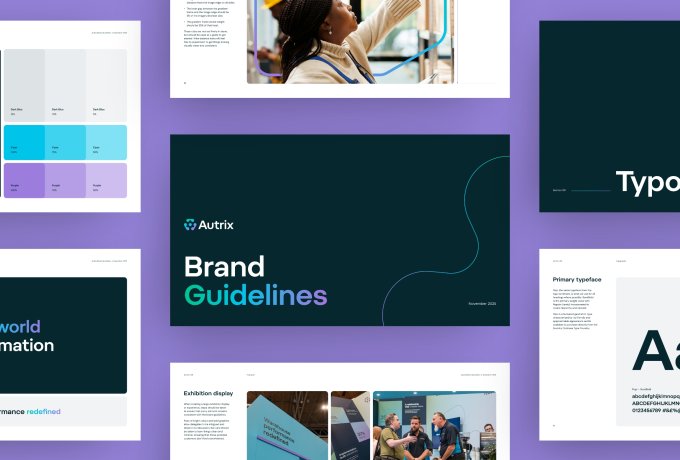
Can brand guidelines become too strict? This article looks at when rules help, when they hold a brand back and how to create space for better design decisions.

How membership organisations can make the value of membership easier to see, understand and use throughout the member journey.