Web & Digital
Oct '25
What makes a great solicitor website? A complete guide for modern law firms

Tom Bradley in Web Design
Related services
When someone needs a solicitor, they're often doing so at a critical moment in their life or business - it's rarely a light decision and trust is everything.
That first impression, whether it comes through a Google search, a recommendation or a direct visit to your homepage, can set the tone for the entire relationship and in that crucial moment, your website carries a huge amount of weight.
It's easy to treat a website like a box-ticking exercise - something that needs updating every few years to keep it looking current, but the reality is, your website should be one of your hardest-working tools. It needs to build trust before a conversation has even started.
It should help the right people find you, understand what you offer and feel confident enough to take the next step. It should speak clearly to private and commercial clients alike while supporting your internal teams and helping attract top talent.
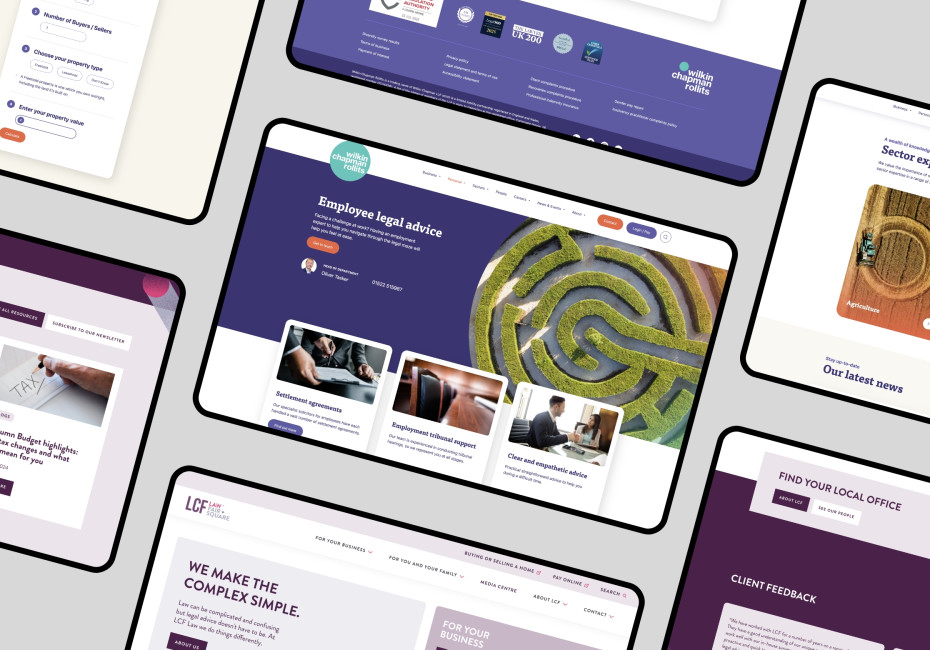
We know this, not just from theory but from experience. We've worked with large regional law firms to create websites that are more than just attractive front-ends. They're lead generators, recruitment tools, client reassurance engines and SEO powerhouses - and this guide is here to share the thinking behind them.
If you're in the planning phase of a new website or trying to build a strong case to secure internal buy-in from partners, this deep-dive is designed to help you ask the right questions, make informed decisions and get real value from the process.
Branding: why first impressions really do matter
One of the most overlooked parts of a solicitor's website design is branding and this is often because it's misunderstood. Many firms see branding as a logo and a colour palette - but true branding is about perception: it’s your imagery, your content, the language that you use, it’s how someone feels when they interact with your firm and how clearly your values come across.
This matters more in law than in most industries. When someone is choosing a solicitor, they want to feel reassured, respected and in capable hands. The visual identity of your website, the tone of voice in your content and the clarity of your messaging all play a vital role in establishing that.
Branding should answer questions like:
Who are we here for?
What makes us different?
Why should someone trust us over the competition?
At its best, branding doesn't just make you look good - it gives shape to your value proposition, creates consistency across your marketing, helps your team feel aligned and most importantly - it sets the emotional tone that your prospective clients respond to.
Understanding your audience: designing around real people
One of the challenges many firms face is trying to speak to "everyone". A generalised approach like this feels safe but often ends up resonating with no one in particular.
The reality is that different audiences come to your website with very different needs. A private client searching for help with a will or family matter is in a very different headspace to a corporate decision-maker seeking legal advice for a growing business. Trainee solicitors looking to start their careers will want something different again. HR teams, potential referrers, returning clients - they all bring their own expectations, questions and barriers.
This is where audience profiling and journey mapping become so important. Start by identifying your core personas. What are they looking for? What questions do they typically ask? What concerns might they have before reaching out? Where are the points in the journey where confusion, hesitation or drop-off is most likely?
We cover this in depth in our recent article on barriers to entry which explores how to uncover and address the hidden hurdles your users may be facing.
When it comes to structuring the experience, we recommend a shift in thinking: rather than obsessing over device size or screen dimensions, think journey-first. Start with what your user needs to achieve then design backwards from there.
Strategy: form should follow function
It's tempting to dive straight into visuals and layout ideas - even to ask agencies to pitch designs as part of your tendering process - but a successful website begins with strategy. That means clearly understanding what the site needs to achieve, who it's for and how success will be measured. Skipping this phase and launching straight into design would be a major (and unfortunately common) mistake.
For many law firms, there are multiple goals in play: lead generation, SEO visibility, brand positioning, internal recruitment and ongoing client communication. Trying to balance all of these without a strategy can lead to a scattered and ineffective experience.
A solid website strategy will:
Define the primary and secondary goals of the site
Map out key user journeys and conversion points
Prioritise content and functionality based on user needs
Consider SEO from the ground up
Align site navigation and hierarchy with real-world expectations
We break this down further in our introduction to conversion rate optimisation (CRO) which looks at how small, strategic shifts in structure and messaging can lead to meaningful improvements in performance.
Tools and functionality: making your website useful, not just informative
While content and design matter, there’s also real value in the tools your site provides - think beyond static pages and service listings: what can you offer that helps visitors take action, find answers or make better decisions?
For example, a quote calculator for conveyancing services can remove the need for someone to pick up the phone. An appointment booking tool gives the user more control over how and when they meet. A live chat function might be the difference between someone leaving confused and unsatisfied versus reassured and ready to talk.
We often find that these interactive tools serve two purposes: they enhance the user experience and increase the chances of a conversion. They also position your firm as progressive, approachable and well-organised.
Content and thought leadership: informing, reassuring and guiding
One of the best ways to demonstrate your expertise without overtly selling is through high-quality, useful content. For solicitors, this often takes the form of articles, case studies, insights and FAQs that help potential clients better understand their situation and the legal process.
Thoughtful content does a few things:
It builds authority and trust in your firm
It provides reassurance to people facing unfamiliar or stressful legal matters
It improves SEO, helping your site rank for specific topics and questions
It gives you something valuable to share across social channels and newsletters
But it only works if it’s written with the reader in mind. Clear language, short paragraphs, relevant examples - these are the ingredients that make complex topics feel digestible.
You can read more about this in our article on writing great website content where we talk about the balance between clarity and personality.
And while the legal profession may lean naturally towards facts and precedent, don’t underestimate the power of storytelling to bring your firm’s work and impact to life.
Attracting talent: don’t let your careers page be an afterthought
In many law firms, recruitment is just as critical as new business - and yet careers sections are often the most neglected part of a website.
A thoughtful, well-presented careers section doesn’t just list jobs - it gives potential candidates a window into what it’s like to work at your firm, showcases your values, your culture and your commitment to development. It makes people feel like they could see themselves there.
This can include:
Staff testimonials or Q&A interviews
Progression routes and training opportunities
Graduate and trainee schemes
Clear, simple application processes
Benefits and wellbeing support
Done right, your website can become a magnet for the kind of talent that fits your culture and contributes to your future.
Ongoing management: your website is never truly ‘finished’
A great website doesn’t stand still. It evolves alongside your firm, your clients and the wider digital landscape - but this only works if you build in the structure and capacity to manage it over time.
That includes:
Assigning internal owners for content updates, blog writing and enquiries
Monitoring performance through analytics and SEO reports
Scheduling regular reviews of key pages and functionality
Working with an external partner for security, updates and improvements
Think of your website like an extension of your team. When it's nurtured, supported and given space to grow, it delivers long-term value. When it’s ignored, it can quickly become a barrier rather than an asset.
Common mistakes we see
Generic branding: If your site looks and sounds like every other firm, it’s hard to stand out or make a lasting impression
Content written by lawyers: Legal accuracy is essential but plain English is what earns trust
Outdated content: These small misses chip away at professionalism
No clear next step: Every page should make it obvious what to do next, whether that’s making contact, downloading a guide or booking a call
No tracking or measurement: If you’re not measuring performance against defined goals, you’re guessing on what works and what doesn't
Your website should work as hard as your top fee earner
A great solicitor website doesn’t shout, it doesn’t try to ‘wow’ - it communicates clearly, earns trust quietly and makes life easier for every visitor who lands there.
Done right, it brings in the right kind of enquiries, supports your existing clients, gives potential candidates a reason to want to work with you and it reflects your values in every interaction.
It’s not about bells and whistles - it’s about clarity, consistency and care.
If you’re at the stage of planning your next website or you’re an internal marketing department preparing a budget case for your firm’s partners to review - we hope this guide helps bring structure to your thinking.
If you’d ever like to chat things through, we’re always happy to share what we’ve learned.
Thanks for reading
For more news follow us @rootstudiouk
Similar posts
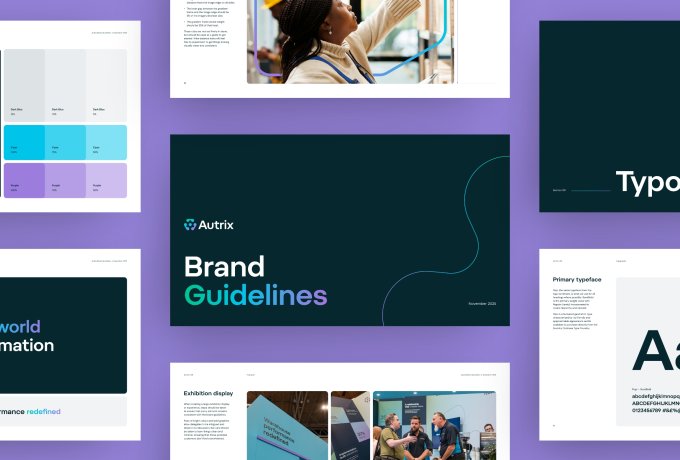
Can brand guidelines become too strict? This article looks at when rules help, when they hold a brand back and how to create space for better design decisions.

How membership organisations can make the value of membership easier to see, understand and use throughout the member journey.